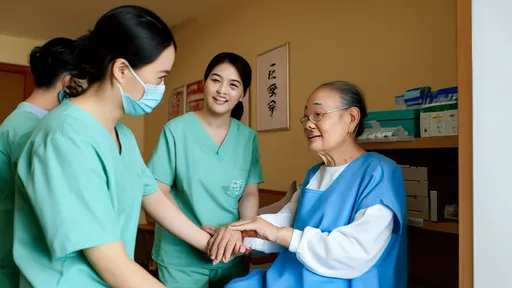
In the hushed corridors of Shanghai's Longhua Hospital, a quiet revolution is unfolding. Here, in the palliative care unit, the relentless beeping of life support machines gives way to the soft murmur of conversations and occasional laughter. Dr. Li Wei adjusts a patient's blanket, her movements deliberate and gentle. "We're not just treating diseases here," she says, her voice barely above a whisper. "We're honoring lives." This scene represents a profound shift in China's approach to end-of-life care, where the focus is moving from aggressive treatment to dignified comfort.
The concept of palliative care arrived in China like a foreign seed trying to take root in unfamiliar soil. When the first palliative care units opened in major cities during the 1990s, they faced skepticism from both medical professionals and families. The prevailing attitude was that doctors should fight death at all costs, using every available technology and treatment. Traditional Chinese values emphasized filial piety, which often translated into insisting on life-prolonging measures regardless of the patient's suffering. Families feared being perceived as abandoning their loved ones if they chose comfort care over curative treatment.
Yet beneath this resistance, a need was growing. As China's population aged rapidly and cancer rates climbed, more families found themselves watching loved ones suffer through painful, invasive treatments that offered little hope of recovery. The economic burden of aggressive end-of-life care pushed many families into poverty, creating what doctors called "medical bankruptcy." Meanwhile, patients often died in intensive care units, connected to machines, their final days spent in isolation from family and familiar surroundings.
The turning point came gradually, through the persistent efforts of pioneering doctors who had trained abroad and witnessed different approaches to end-of-life care. They began organizing conferences, writing articles, and quietly transforming small sections of their hospitals into spaces where patients could spend their final days with dignity. What started as isolated initiatives in Shanghai, Beijing, and Guangzhou began spreading to other cities. These early advocates faced numerous challenges—from colleagues who viewed palliative care as "giving up" to families who couldn't comprehend why they would choose anything less than maximum intervention.
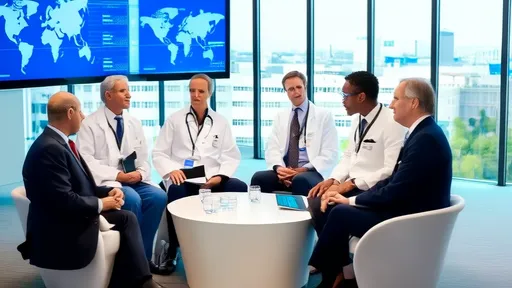
Today, the landscape is changing. Government policies have begun to recognize the importance of palliative care, with the National Health Commission incorporating it into China's healthcare development plans. Medical schools are starting to include palliative care in their curricula, though the integration remains uneven across different institutions. What's particularly remarkable is how palliative care teams are adapting Western models to fit Chinese cultural contexts. They're finding ways to discuss death that respect traditional taboos while still ensuring patients understand their prognosis.
At the heart of this transformation are the palliative care teams themselves—multidisciplinary groups comprising doctors, nurses, social workers, and psychologists. Their work extends far beyond pain management. They help patients complete unfinished business, facilitate difficult family conversations, and create moments of meaning and connection. Nurse Wang Ling describes how her team recently organized a early birthday celebration for a eight-year-old girl whose mother was dying. "The mother knew she wouldn't live to see her daughter's actual birthday," Wang recalls, her eyes misting. "That afternoon, watching them blow out candles together—that's why we do this work."
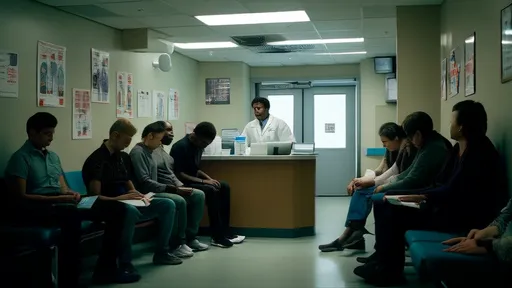
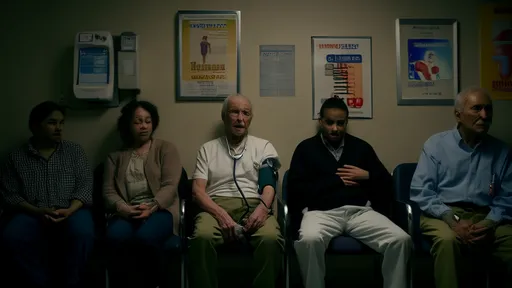
The challenges remain substantial. There are still far too few palliative care specialists for China's aging population. Many hospitals in smaller cities lack dedicated palliative care units entirely. Insurance coverage for palliative services remains inconsistent, creating financial barriers for many families. Cultural attitudes change slowly, and many Chinese still view discussing death as inviting misfortune. Yet the very resistance makes the work feel more urgent to those in the field.
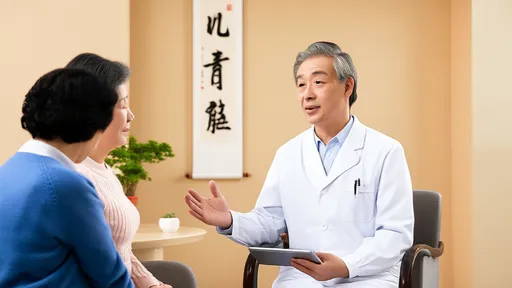
Perhaps the most significant barrier is the difficulty families have in accepting terminal diagnoses. Dr. Zhang Ming, who leads a palliative care team in Beijing, explains that he often spends more time counseling families than treating patients. "The patient may be ready to stop suffering, but the children feel they must try everything or they're being unfilial," he says. "We have to help them understand that sometimes the most loving choice is to stop causing pain."
Technology is playing an increasingly important role in expanding access to palliative care. In rural areas where specialists are scarce, telemedicine platforms connect local doctors with palliative care experts in major cities. Mobile apps help families monitor symptoms and communicate with care teams. Social media platforms have become unexpected tools for public education, with doctors sharing information about palliative care and debunking common misconceptions.
The COVID-19 pandemic unexpectedly accelerated the acceptance of palliative approaches. During the crisis, families often couldn't be with hospitalized loved ones, making the prospect of isolated, technology-driven deaths particularly frightening. This experience made many people reconsider what matters most at life's end. The pandemic also highlighted the emotional toll on healthcare workers, leading to greater recognition of the need for the psychological support that palliative care teams provide.
Looking forward, the pioneers of China's palliative care movement envision a future where every dying person has access to compassionate care. They're working toward integrating palliative services into community health centers, making support more accessible to people who wish to die at home. Research initiatives are documenting the benefits of palliative care—not just for patients' quality of life, but for reducing healthcare costs. These economic arguments are helping persuade hospital administrators and policymakers to invest in palliative services.
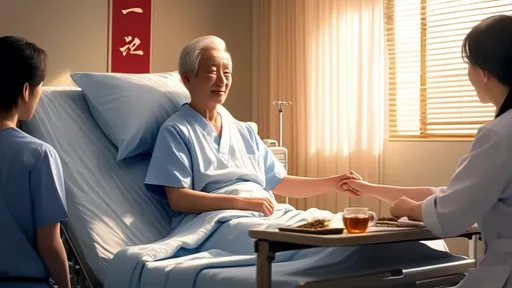
What's emerging in China is a uniquely Chinese approach to end-of-life care—one that blends medical expertise with cultural sensitivity. It respects the importance of family in decision-making while gradually empowering individuals to express their preferences. It maintains hope while acknowledging mortality. In hospital rooms across the country, small miracles occur daily: a grandfather listens to his favorite opera one last time, a wife holds her husband's hand as he takes his final breath, a family finds peace after weeks of anguish.
The work remains difficult, the progress incremental. But in the growing acceptance of palliative care, we see China developing a new vocabulary for discussing death—one that emphasizes love, dignity, and the quality of life until the very end. As Dr. Li Wei says, watching the sunset from her unit's window, "We're learning that a good death is as important as a good life. And that's a revolution worth having."

By /Oct 14, 2025
By /Oct 14, 2025
By /Oct 14, 2025

By /Oct 14, 2025

By /Oct 14, 2025
By /Oct 14, 2025
By /Oct 14, 2025

By /Oct 14, 2025

By /Oct 14, 2025
By /Oct 14, 2025
By /Oct 14, 2025
By /Oct 14, 2025
By /Oct 14, 2025

By /Oct 14, 2025

By /Oct 14, 2025
By /Oct 14, 2025
By /Oct 14, 2025

By /Oct 14, 2025

By /Oct 14, 2025

By /Oct 14, 2025
