In the quiet hum of a kitchen warmed by the oven’s glow, a common frustration often unfolds: a tray of cookies that spread into flat, shapeless puddles rather than holding their intended form. The grand visions of thick, chewy chocolate chip cookies or intricately shaped shortbread that held their delicate patterns fade into a disappointing, albeit tasty, reality. For years, bakers have puzzled over this culinary conundrum, tweaking flour ratios, butter temperatures, and leavening agents in pursuit of the perfect, defined bake. Yet, the most potent weapon in this battle for structural integrity requires no fancy ingredient or complex technique. It demands only one thing: time. The secret, whispered among seasoned pastry chefs and meticulous home bakers, is disarmingly simple: chill your cookie dough.
The science behind this transformation is a fascinating dance of chemistry and physics, beginning with its most notorious participant: butter. In its soft, room-temperature state, butter is pliable and aerated, often creamed with sugar to incorporate tiny air bubbles that will later expand in the oven’s heat. This expansion is a primary driver of spread. When a dollop of soft dough hits a hot baking sheet, the butter melts almost instantaneously. It liquefies, leaches out, and essentially fries the edges of the cookie, pushing the structure outward before the other ingredients—like flour and eggs—have had a chance to set. The result is a cookie that is thin, often greasy, and lacking height.
Chilling the dough fundamentally alters this timeline. By refrigerating the mixed dough for a solid hour—or even longer—the butter solidifies. It becomes firm and stable. When that cold dough is then placed in the oven, it takes a significantly longer time for the solid butter to warm up, melt, and begin to spread. This critical delay provides a precious window of opportunity for other reactions to occur first. The proteins in the eggs and flour begin to coagulate and set, building a structural network that can trap the expanding gases from the leavening agents. The sugar begins to caramelize at the edges, and the exterior of the cookie starts to firm up. By the time the butter finally surrenders to the heat and melts, the cookie’s architecture is already partially established. It resists the outward push, resulting in a cookie that rises upward rather than spreading outward, yielding a thicker, chewier, and more立体 (three-dimensional) center with a better contrast between a crisp edge and a soft interior.
But the benefits of this patient waiting period extend far beyond fat management. The process of hydration continues unabated in the cold. Flour is composed mainly of starch granules and proteins. When mixed with wet ingredients, it begins to absorb them, but this is a slow process. Chilling the dough gives the flour all the time it needs to fully absorb the liquid—be it water from the butter, milk, or eggs. This thorough hydration is crucial. Well-hydrated starch granules swell and gelatinize more evenly in the oven, contributing to a tender, consistent crumb. Meanwhile, the proteins glutenin and gliadin in the flour, which form gluten when agitated, get a chance to relax. While minimal gluten development is desirable in some cookies for a slight chew, overworking the dough can make it tough. Chilling allows these tense gluten strands to unwind, ensuring your cookies are tender, not tough.
Furthermore, for recipes rich in brown sugar, molasses, or spices like cinnamon and nutmeg, the chill period acts as a marinade for flavors. The extended time allows the individual flavors to meld and deepen, moving from a collection of separate ingredients into a harmonious, complex whole. The sharpness of the baking soda mellows, the vanilla integrates fully, and the spices perfume the entire batch of dough. This results in a baked cookie whose flavor is profoundly richer and more developed than one baked immediately after mixing. The difference is not subtle; it is the gap between a good cookie and an unforgettable one.
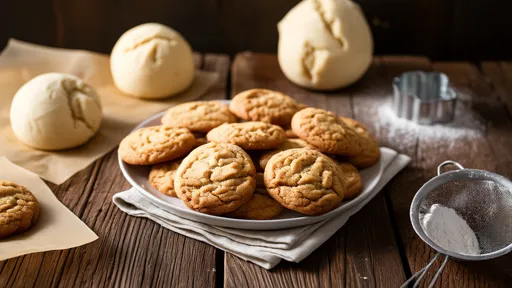
The practical application of this secret is wonderfully straightforward, yet its execution can be tailored to any baker’s schedule. After mixing your dough to perfection, resist the almost irresistible urge to immediately scoop and bake. Instead, press the dough into a cohesive mass, wrap it tightly in plastic wrap to prevent it from absorbing any off-flavors from the refrigerator and to stop it from drying out, and place it on a shelf. While a minimum of one hour is effective, the dough can happily rest for up to 72 hours, often with even more improved results. For those who crave instant gratification, portioning the dough into individual cookie balls *before* chilling is a masterstroke. This not only makes for a quicker bake straight from the fridge but also ensures that each cookie is a perfect, round sphere that will bake evenly. Placing these dough balls on a parchment-lined baking sheet for their chill ensures they won’t stick together, ready to be transferred directly to the oven.
The impact of this cold hiatus is visibly dramatic the moment the oven door is opened. Instead of a pan of merging, flat disks, you are greeted with proud, individual cookies. They hold the marks of a fork or the intricate design of a stamp. Their edges are perfectly defined, their surfaces craggy and appealing. They possess a stature that promises a satisfying bite—a firm exterior that gives way to a dense, chewy, or soft center, depending on the recipe. The Maillard reaction and caramelization have had time to work their magic evenly, producing a beautiful golden-brown color and a complex, nutty, buttery flavor that is the hallmark of a perfectly executed bake.
Ultimately, the act of chilling cookie dough is a powerful lesson in the art of baking. It is a discipline that prioritizes patience over haste, and foresight over impulse. In a world that often values speed, this simple step is a quiet rebellion. It proves that the most transformative elements in the kitchen are not always the expensive gadgets or rare ingredients, but an understanding of the science at play and the willingness to grant the process the time it demands. This unassuming secret, the pause between mixing and baking, is what elevates a simple treat into a masterpiece of texture and taste, ensuring every cookie is a perfect,立体 testament to the baker’s skill.
By /Aug 20, 2025
By /Aug 20, 2025

By /Aug 20, 2025
By /Aug 20, 2025
By /Aug 20, 2025
By /Aug 20, 2025
By /Aug 20, 2025

By /Aug 20, 2025

By /Aug 20, 2025
By /Aug 20, 2025
By /Aug 20, 2025
By /Aug 20, 2025
By /Aug 20, 2025
By /Aug 20, 2025

By /Aug 20, 2025
By /Aug 20, 2025

By /Aug 20, 2025
By /Aug 20, 2025

By /Aug 20, 2025
By /Aug 20, 2025
